sexta-feira, 17 de março de 2017

BMW THE NEXT 100 YEARS


A BMW em 2016 comemorou 100 anos
Nos últimos 100 anos, contribuímos para impulsionar o futuro da mobilidade seguindo a nossa própria visão: criar veículos de referência que proporcionem o mais Puro Prazer de Dirigir – uma sensação que somente quem está ao volante de um BMW pode ter. Mas é possível experimentar ainda mais emoção. Para assegurar que isso aconteça, convidamos você a conhecer um veículo conceito que vai inaugurar uma inovadora maneira de ser motorista. Descubra o BMW VISION NEXT 100. Uma nova dimensão do Prazer de Dirigir.

INTELIGÊNCIA CONECTADA.

A inteligência sensorial e digital, sempre disponível, e a conectividade do BMW VISION NEXT 100 estão incluídas no novo Copiloto inteligente, permitindo ao veículo conhecer cada vez mais o motorista. Assim, oferece assistência intuitiva e sutil, em qualquer situação. Ou seja, mais do que nunca, o Copiloto transforma cada viagem numa experiência personalizada e recompensadora para quem está ao volante.


CASSINA BEAM SOFA BY PATRICIA URQUIOLA


BEAM SOFA
Concebido por Patricia Urquiola, este sofá articulado é composto por almofadas macias apoiadas sobre uma viga. estamos perante a nova coleção de tecidos, e o material em listas, concebido por giulio Ridolfo exclusivamente para este sofá.


Beam Sofa System di Patricia Urquiola. Rigore architettonico in un accogliente abbraccio.

Il Beam Sofa System è un sistema di sedute morbide sorretto da una trave, un gesto netto, che ‘solleva’ i cuscini flessibili e leggeri dello schienale e dei braccioli, che si incontrano in un abbraccio sapiente. Il Beam Sofa System ha quelle qualità nascoste che spesso caratterizzano i modelli dell’azienda e che rendono omaggio al lavoro di Vico Magistretti. Il progetto è composto da una trave come base e da una serie di cuscini e sedute avvolgenti. Un divano componibile, libero dagli schemi.


quarta-feira, 8 de março de 2017

DIMITRI BAHLER CERAMIC


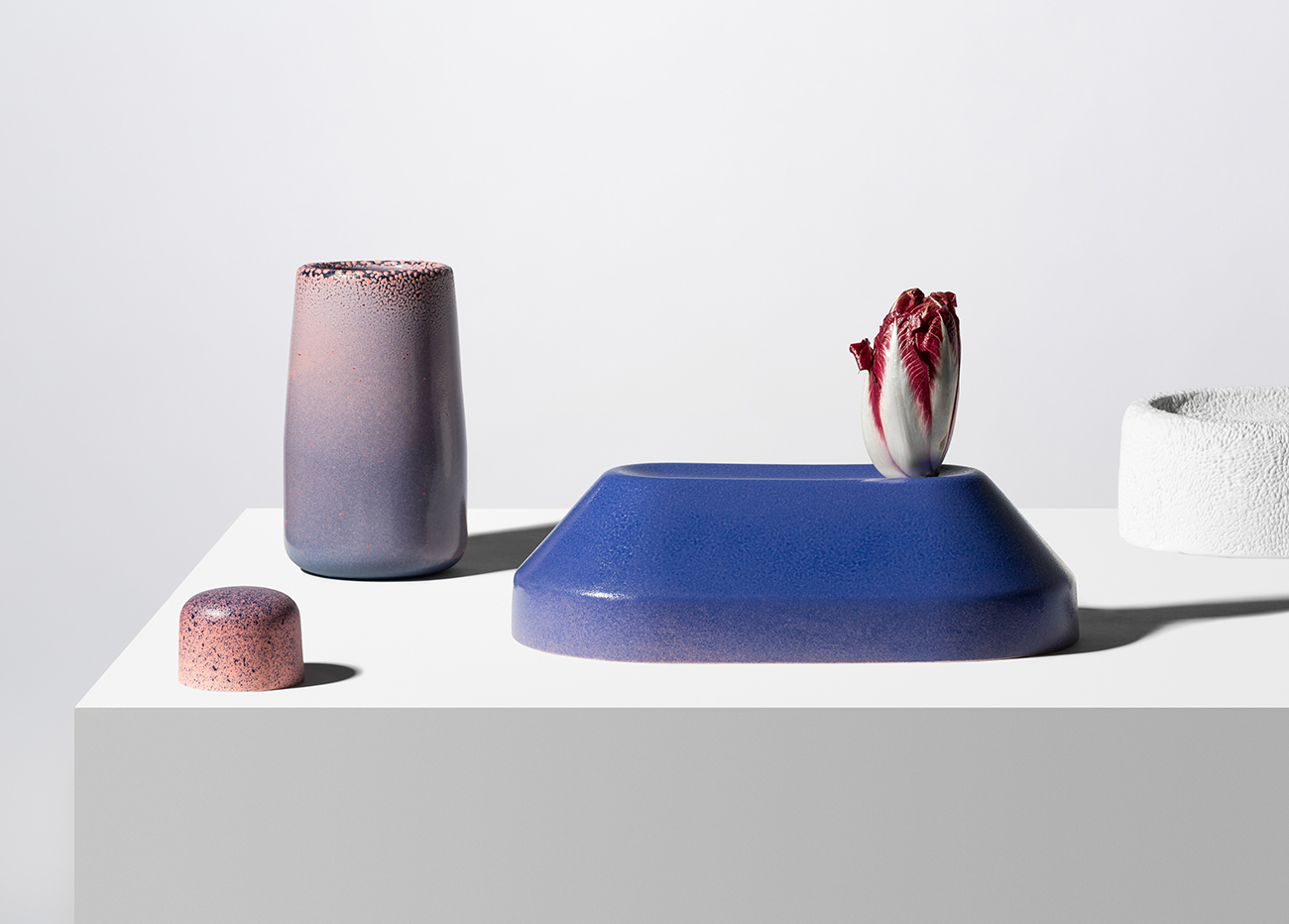
Ceramic Experiments by Dimitri Bähler

Two years after his ‘Patterns & Colors’ series, Swiss designer Dimitri Bähler has been invited to develop his ceramic experimentations at CERCCO workspace, the Experimentation and Research Center for Contemporary Ceramics of the Geneva University of Art and Design.
As a jumping-off point, he could succeed to ‘VPT&C’ as ‘Volumes, Patterns, Textures & Colors’, a set of vases, plinths or other abstract artefacts that questions the functionality of objects. Decorative, useful or both, the versatility of his works is divided up into three main axes. Starting with digital printing in 2013, then carving by wood tools and natural process where the glaze itself generate textures. Thanks to his dedication, he won the Grand Prize of the Interieur award competition 2016. Some of these pieces are available on Dimitri Bähler website or at VITRA Schaudepot shop.


BANG & OLUFSEN


A Love Affair with Bang & Olufsen

To inaugurate their 90 years anniversary, Bang & Olufsen has released a sumptuous collection entitled ‘The Love Affair’. Gathering six iconic products pulled from their entire collection, they have slid a new wardrobe for the occasion. Granting importance to material’s meaning, the union with the glam’ rose gold and the mysterious and powerful walnut represents technological progress lid by a constant elegance. To pay tribute to all these years of success, each piece of the series is engraved by the number ’90’. The elegant shapes of luxury hi-fi products also allow them to be used as decorative object.


ALAN GILLES - EVOLUTION


"Evolution" é uma nova base de marcas de ferramentas de cozinha francesa na Normandia, criada por Vincent Le Guern. A marca oferece uma primeira colecção de quatro produtos inovadores, frescos e tranquilizantes baseados na rica tradição culinária francesa e europeia.
Através de formas sensuais e gráficas, "Evolution" propõe produtos com funcionalidades inovadoras que acompanham a evolução do nosso ritmo e modo de vida e que foram concebidos para durar no tempo.
Três produtos da gama foram editados pela Evolution em um acabamento em cobre, em colaboração com a histórica marca francesa Mauviel 1830, re-imaginando assim os valores desta grande casa francesa.
A identidade gráfica ea marca foram feitas pela Coast.
Trata-se de itens comuns, de uso cotidiano, cujas características foram melhoradas graças à aplicação de uma segunda pele de forma muito gráfica. A beleza da garrafa é que o pescoço, que é enfatizado, torna-se a alça. Aqui temos um bom equilíbrio entre projetos convencionais modernizados e um pescoço em forma de funil para facilitar o manuseio. Este é um diálogo entre materiais e períodos diferentes.    


Da apresentação mais refinada para o armazenamento no armário mais padrão. A possibilidade de fazer uma variedade de apresentações, tratando a base ea placa do servidor tart como dois elementos separados. Ao inverter a base, ela se transforma em uma tigela que pode ser usada para servir os vários molhos que às vezes acompanham o bolo. A placa é concebida de tal forma que ele ajuda a cortar e servir porções iguais de graças tart para alguns pequenos encrusted marque. Este servidor tart é uma peça que será um elemento decorativo, mesmo quando não estiver em uso. Uma mistura entre tradição e modernidade.


Evolution” is a new French kitchen tools brand base in Normandy, created by Vincent Le Guern. The brand offers a first collection of four innovative, fresh and reassuring products based on the rich French and European culinary tradition.
Through sensual and graphic shapes, “Evolution” proposes products with innovative functionalities that follow the evolution in our rhythm and way of life and that have been designed to last in time.
Three products of the range have been edited by Evolution in a copper-finish in collaboration with historic French brand Mauviel 1830 thus re-imagining the values of this great French house.
The graphic identity and branding have been done by Coast.
“Evolution”  is a new French kitchen tools brand base in Normandy and created by Vincent Le Guern. The brand offers a first collection of 8 innovative, fresh and reassuring products based on the rich French and European culinary tradition.
Through sensual and graphic shapes, “Evolution” proposes products with innovative functionalities that follow the evolution in our rhythm and way of life and that have been designed to last in time.
This meat thermometer really deserves not to be hidden away in a drawer. It echoes the very archetype of this kind of product while bringing it right up to date, but with class.  It has an external graphic display that you set beforehand so it’s easy to tell when internal indicator reaches the desired temperature, and it also prevents the thermometer from rolling away when resting on your working surface.  It’s fitted with a simplified, elegant dial and additional design 


The chopping board is beyond doubt an essential everyday item, whether it’s for peeling or chopping onions or carrots. And there’s usually a moment in the peeling process when you find that the board is already full of peelings, and now it’s time to chop. So what do you do with the peelings when the vegetables you’re about to chop are still on the board? Do you tip them off onto the work surface, or do you put the vegetables aside so that you can discard the peelings? What you find is that when you’re cutting up food, you often need to extend the board so that you can push aside whatever it is you’ve already cut up, and which is taking up more and more room. This gave us the idea of a “scoop”, built into the board, but which can be slid along the chopping board, and handled as a separate unit.
When you want to tip some ingredients, such as tomatoes, into the pan, it often happens that you want less juice to go in, so as to avoid making the dish too wet. The “scoop” can now operate like a funnel, so that you can hold back the chopped tomatoes and run off some of the juice.




ALAIN GILLES STUDIO /BONALDO


ALAIN GILLES THE STUDIO

SHORT BIOGRAPHY

Design as a second life. After studying Political Sciences and Marketing Management, Alain Gilles went on to work in the international financial world for 5 years. But one has to live his own life. So, thanks to the moral support of his wife, he went back to studying Industrial design in France.
He opened his own studio in late 2007 in order to pursue his own dreams and develop his personal approach to product design, furniture design, art direction and scenography. He has since started to collaborate with several international editors such as Qui est Paul ?, Galerie Gosserez Paris, Magnitude, O’Sun, La Chance, Evolution, Buzzispace, Casamania and Bonaldo.
Several of his products have been awarded international prices, such as the Henry Van De Velde Label, the Design for Asia Golden Award, The “Red Dot Best of the Best” for the Welded table and the Good Design award for the Big Table.
In 2012, he was named “Designer of the Year”  by the prestigious Interieur Kortrijk Fair.
Born:  1970 in Brussels (BELGIUM)

AWARDS  &  PRICES


  • Wallpaper Design Award 2017 (Best New Angles category) for the New BuzziBlinds designed for Buzzispace. 
  • Les découverte M&O January 2017 for the kitchen tool collection designed for Evolution.
  • HIP Awards Winner, 2016  (NEOCON, Chicago, USA)  in the 'Accessories' product category for the New BuzziBlinds designed for Buzzispace.
  • Henry Van De Velde Label, 2015 (BE)  for the Structure sofa designed for Bonaldo.
  • IMM Innovation Award 2014 (Cologne, DE) for the Multifonctional BuzziPicnic table designed for Buzzispace (BE).
  • Good Design award, 2014  (USA), awarded by the "Chicago Athenaeum: Museum of Archiecture and Design" for the Tracks Table designjed for Bonaldo.
  • Good Design award, 2014  (USA), awarded by the "Chicago Athenaeum: Museum of Archiecture and Design" for the multifonctional BuzziPicnic table collection designjed for Buzzispace.
  • BOY Winner, 2014  (USA), organized by Interior Design Magazine, in the "Furniture Contract/System" category.
  • Contract Magazine Editor's choice Award, 2014 (USA)  in the 'Collaborative Furniture' section for the BuzziPicnic Table designed for Buzzispace.
  • HIP Awards Winner, 2014  (NEOCON, Chicago, USA)  in the 'Collaboration / Large' product category for the BuzziPicnic table designed for Buzzispace.
  • HIP Awards Honoree, 2014" (USA)  in the 'Flexible Office Solution' category for the BuzziVille designed for Buzzispace in collaboration with the Buzzispace Design Team.
  • ADEX Silver Award for Design Exelence, 2014 (USA) for the BuzziHive designed for Buzzipsace.
  • Green Dot Award, 2013, Los Angeles, (USA)  for the Nomad solar portable lamp designed for O'Sun.
  • Red Dod design Award - Best of the Best, 2013 (DE)  for the Welded table designed for Bonaldo.
  • Henry Van De Velde Public Award, 2012 (BE)  for the Nomad solar portable lamp designed for O'Sun.
  • Designer of the Year, 2012 (BE) awarded by the biennale Interieur Kortrijk, the Design Museum of Gent, the Grand-Hornu Image Museum, design September, Knack Weekend magazine & Le Vif Weekend magazine.
  • Design for Asia - Golden Award, 2012, (HK)  awarded by the Hong Kong Design Center for the Nomad solar portable lamp designed for O’Sun.
  • Henry Van De Velde Label, 2012 (BE)  for the Nomad solar portable lamp designed for O'Sun.
  • Henry Van De Velde Label,  2011 (BE)  for the BuzziBooth designed for Buzzispace.
  • Good Design Award, 2009, (Chicago - USA)  for the Big Table designed for Bonaldo.
  • Fost Plus - Reinventing Packaging Award, 2009 (BE)  for the recycled Translation range designed for Qui est Paul ?.
  • Henry Van De Velde Label, 2008 (BE)  for the Tectonic tables designed for Bonaldo.


The “Mass” table collection is a discussion between the visual presence and the actual mass of a product and its different components. It plays on a well-known archetype: the dining table, the stability of which is ensured by a large solid base.
In the case of the Mass table, the base has become a lightweight see-through element while, by comparison, the wooden table top has become a plain visual mass. In this way, the weight and visual weight of the elements have been inversed in comparison to the archetype. This is further emphasised by the visual gap created between the base and the table top thanks to a connecting element.
The architecture of the base is very similar to a “crinoline”, the underskirt invented and used by women in high society in around 1830. But this architecture is also very modern and resembles the “wireframe” structure of a 3D CAD model used by architects and designers. These wireframes are what we designers see when sculpting a design in 3D on the computer. So, in a way, the base is a subtle mix of tradition and modernity.
The production of the metal base relies on the precision of the computer controlled tools (the CNC machines) to correctly bend and cut each tubular part composing the whole and the expertise and ability of the welder who perfectly assembles and finishes them.
As for the wooden table top, although it is more solid than in general, it looks like it is floating and resting on one single point right above the connecting element between the table top and the base.
The end result is a graphic table which has a strong personality but doesn’t take up too much room visually. It is also a table which generates a visual tension and movement as one moves away from or around the table.


www.alangilles.com

segunda-feira, 6 de março de 2017

HARMONIA ARTIST RESIDENCE SÃO PAULO


The project in Harmonia Street by Triptyque Architecture is a unique view of what it is called a “living building”. Located in the west side of São Paulo, a neighbourhood where artistic life and creativity is in constant evolution, the street is a hub for galleries and urban walls functioning as a canvas for new cultural expression. The alleyway in front of the building is an example – covered in graffiti, an art form well represented in São Paulo.
Like a living body, the building breathes and has clever dynamic design solutions. The walls are thick and covered externally by a plant layer that works like the skin of the structure. This dense wall is made of an organic concrete that has pores, where several plant species grow, giving the facades a unique look.

n this great architectural space the rain and soil waters are collected, treated and reused – forming a complex ecosystem.

The interior spaces are carefully finished with clear and luminous surfaces, as if the construction was inside out. The pipelines that serve the whole building – as well as the pumps and the water treatment system – are exposed in the exterior walls, which host them like veins and arteries of a body.


The terraces are spread out on each floor, creating a visual game between volumes, light and transparency in the internal spaces. The frontal block is completely suspended, “levitating” over stilts, while the back block is solid, complemented by a birdhouse-like structure on the top.

Landscaper: Peter Webb
Project Manager: Tiago Guimarães
Credits: Nelson Kon, Triptyque, Beto Consorte, Leonardo Finotti, Ricardo Bassetti

Written by François Correia
by trendland